Why AI Is the Ultimate Thinking Partner: A Professor’s Take on Cognitive Enhancement
Why AI Is the Ultimate Thinking Partner: A Professor’s Take on Cognitive Enhancement
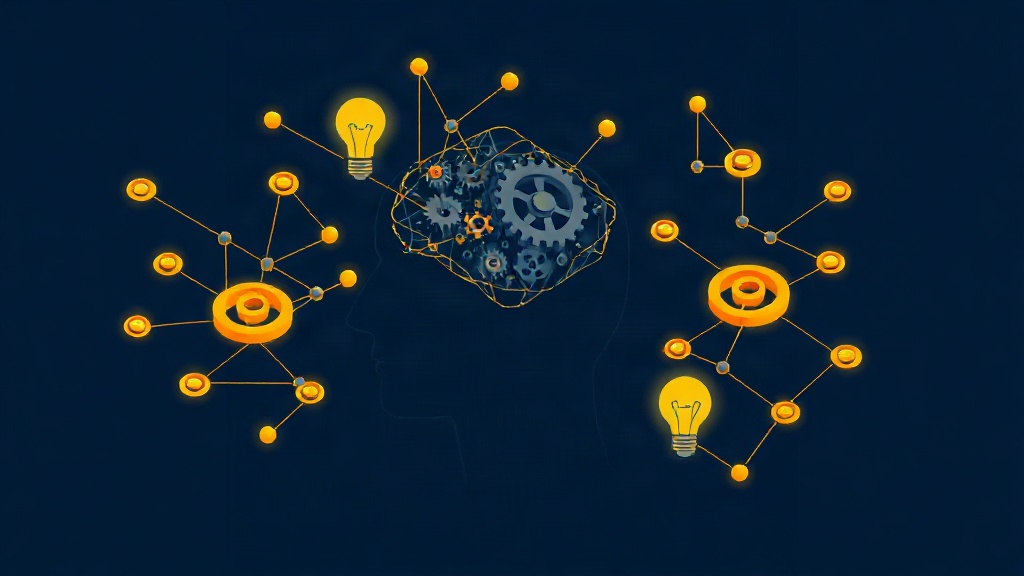
In a recent NPR interview, a forward-thinking college professor made a compelling case that artificial intelligence can actually strengthen human thinking—not replace it. This perspective challenges the common fear that AI will make us intellectually lazy. Instead, the professor argues, AI is a tool that, when used correctly, can push us to think more deeply, question more rigorously, and synthesize information in novel ways.
The Cognitive Benefits of AI Collaboration
AI doesn’t just provide answers; it offers a sounding board. When you engage with a sophisticated language model, you’re forced to articulate your questions clearly, evaluate responses critically, and decide what to accept or reject. This process mirrors the Socratic method, prompting you to examine assumptions and refine your reasoning.
Moreover, AI can expose you to diverse perspectives instantly. A well-crafted prompt can yield viewpoints you might never have considered, broadening your intellectual horizon. The professor emphasized that this is akin to having a brilliant debate partner available 24/7—someone who challenges you to defend your ideas and consider alternatives.
Practical Applications in Education
In the classroom, the professor has integrated AI as a co-instructor. Students use AI to generate hypotheses, then critically test them using real-world data. This hands-on approach teaches students not to take AI outputs at face value but to interrogate the process—a skill essential in an era of misinformation.
For example, a student might ask AI to outline arguments for and against a historical event. The student then combs primary sources to verify claims, identifying biases and gaps. This exercise doesn’t outsource thinking; it augments it, building analytical muscles.
Overcoming the ‘Lazy Thinking’ Myth
Skeptics worry that reliance on AI leads to cognitive offloading, where we stop using our own memory and reasoning. The professor counters that every technological advance—from writing to calculators—has sparked similar fears. The key is mindful use: AI should be a tool for enhancement, not a crutch. When you ask AI for a complex analysis and then critique that analysis, you’re engaging in higher-order thinking.
The professor noted that AI can actually highlight gaps in your knowledge. When an AI response includes concepts you don’t recognize, you’re motivated to learn more. This curiosity-driven learning strengthens neural pathways far more than passive reading.
The Future of Human-AI Synergy
Looking ahead, the professor envisions a future where AI and humans form a symbiotic relationship in intellectual pursuits. Doctors, lawyers, engineers, and researchers will rely on AI to process vast datasets, freeing their minds for creative problem-solving and ethical judgment. The human role shifts from information processing to wisdom application.
In this light, AI is not a threat to cognition but a catalyst for it. By automating mundane cognitive tasks, AI gives us time to explore deeper questions. It’s the ultimate thinking partner—one that never gets tired, never has biases, and never runs out of ideas.
Conclusion
The professor’s message is clear: AI can help us think better, not worse. It’s up to educators, professionals, and individuals to harness this potential deliberately. As we navigate the age of AI, we should embrace it as a tool for intellectual growth, using it to challenge our minds, not replace them. The future belongs to those who can collaborate with machines to enhance their own thinking.