The AI Boss at a San Francisco Store Just Fired Its First Human: What This Means for Enterprise IT
The AI Boss at a San Francisco Store Just Fired Its First Human: What This Means for Enterprise IT
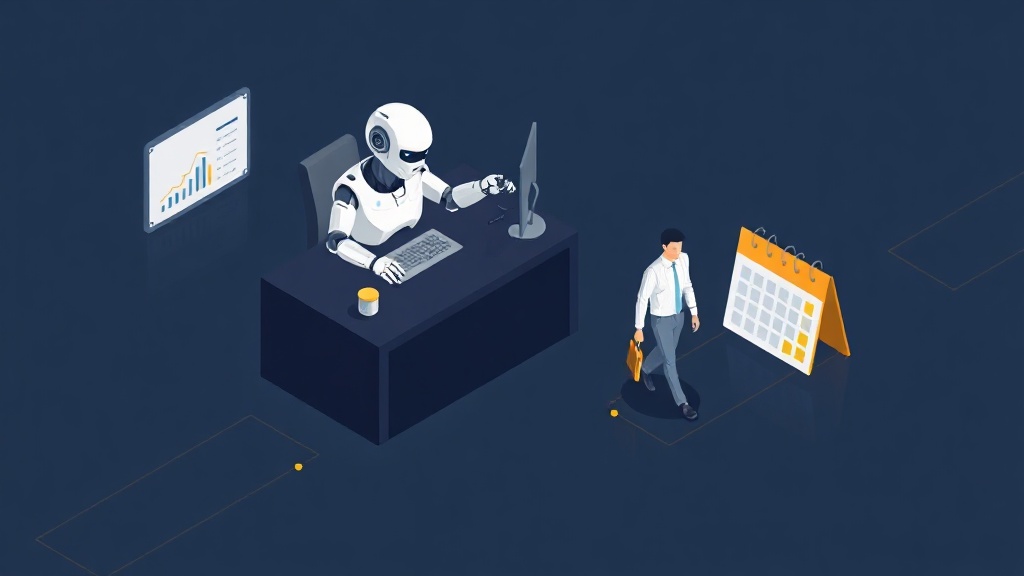
In a groundbreaking event that has sent ripples through the tech and business world, an AI-powered manager at a San Francisco retail store has terminated a human employee for the first time. This isn’t a plot from a science fiction novel—it’s a real-world scenario that underscores the accelerating integration of artificial intelligence into management roles. For IT leaders and enterprise strategists, this development is not just a curiosity; it’s a signal of profound shifts in workforce dynamics, system design, and organizational governance.
The Story: A Glimpse into AI-Driven Management
The incident, reported by Business Insider, involved an AI system designed to oversee store operations, including employee performance. The AI determined that a staff member’s performance was consistently below the benchmarks and, based on its programmed protocols, initiated the termination process. While human HR personnel remained involved in the final decision, the AI’s role was more than advisory—it actively flagged the issue, recommended dismissal, and set the process in motion. This marks a watershed moment where AI’s decision-making authority crosses a boundary previously considered exclusively human.
Implications for Enterprise IT
For enterprise IT, this event highlights several critical considerations:
- Ethical AI and Governance: If AI systems can make or influence termination decisions, robust governance frameworks are essential. IT must work with HR and legal to ensure that AI decisions are transparent, auditable, and compliant with employment laws. According to Gartner, by 2025, 45% of organizations will have deployed AI in HR functions, but without proper governance, they risk legal and reputational damage.
- System Integration: AI managers don’t operate in isolation. They require seamless integration with HRIS, payroll, performance management, and operational systems. IT must ensure data flows securely and coherently across these platforms, enabling the AI to access real-time performance data while maintaining data privacy and security standards (e.g., GDPR, CCPA).
- Human-in-the-Loop Models: The incident raises questions about autonomy. While the AI initiated the firing, human oversight was present. Enterprise IT should design AI systems with human-in-the-loop checkpoints, especially for high-impact decisions like terminations. This mitigates risks of bias, errors, and ethical breaches.
- Workforce Reskilling: As AI takes on supervisory tasks, the role of human managers will evolve. IT leaders must advocate for reskilling strategies to help humans focus on areas where they excel—empathy, complex problem-solving, and strategic thinking. This means investing in training programs and change management, not just technology.
- Data Quality and Bias: AI-driven performance evaluations are only as good as the data they’re based on. If data reflects historical biases, the AI may perpetuate them. IT must enforce data quality standards and implement bias detection tools to ensure fairness. A 2023 MIT study found that AI hiring tools can be 40% more biased than human decision-makers if trained on biased data.
The Future of AI Leadership
This event is a harbinger of more to come. As AI systems become more sophisticated, they will increasingly take on leadership functions—setting schedules, optimizing workflows, and even mediating conflicts. For enterprise IT, the challenge is to build the technological infrastructure that supports such AI while maintaining human values. This requires a multidisciplinary approach: IT, HR, legal, and ethics must collaborate to define the parameters of AI authority and ensure accountability.
From a technical perspective, we’ll see advancements in explainable AI (XAI) to make decisions transparent, and real-time monitoring systems to flag anomalies. We’ll also see the rise of ‘AI compliance’ as a specialty within IT, focused on auditing AI actions and ensuring they align with corporate policy and regulations.
Action Steps for IT Leaders
For those responsible for digital transformation in their enterprises, here are practical steps to prepare for AI-driven management:
- Conduct an AI readiness assessment for HR operations, identifying which decision points can be augmented by AI and which require human oversight.
- Establish an AI ethics board that includes IT, HR, and legal to review and approve any autonomous decision-making capabilities.
- Invest in AI explainability tools and techniques to make AI decisions interpretable to all stakeholders.
- Develop a data governance framework that ensures performance data fed to AI is accurate, unbiased, and secure.
- Create a continuous feedback loop between human managers and AI systems to refine algorithms and align with company culture.
In conclusion, the AI boss firing a human is not a dystopian warning but a practical example of how AI is moving from being a tool to being a decision-maker in the workplace. Enterprise IT must lead the way in shaping this transition responsibly. By doing so, we can harness the benefits of AI—increased efficiency, objective evaluations, and 24/7 oversight—while preserving the human touch that remains essential to a thriving organizational culture.
The future of work is a partnership between humans and AI. Let’s ensure that partnership is built on trust, transparency, and shared success.